History behind the Ring House
Published 6:21 pm Tuesday, October 13, 2026
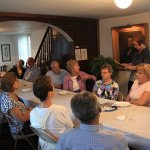
“The Rings lived in the home most of their married life, with the exception of several years when they resided in Onawa while he worked in the Courthouse…”
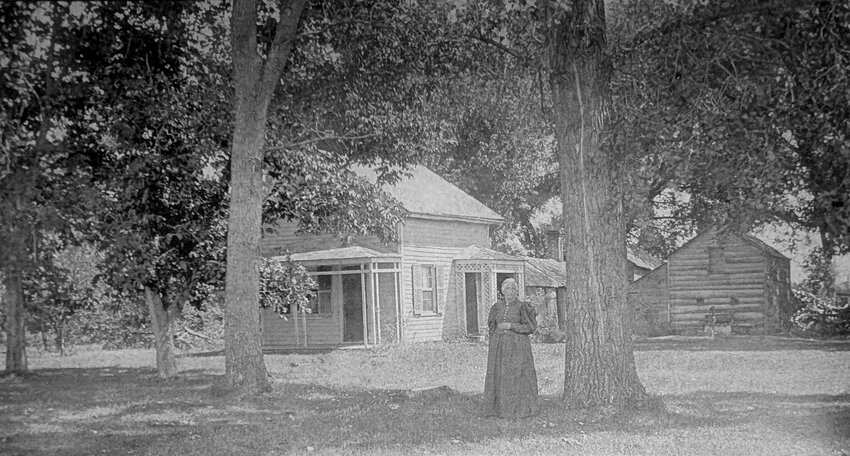
In 1865, after living here for nine years, William Ring built his home which today is still standing just north of Main Street on Sixth Street in Mapleton. Over the past six years local residents and many students at Maple Valley – Anthon Oto High School have been restoring this historic home.
The Ring House was built 2 3/4 miles north of Mapleton on the east side of what is now Highway 175. Before Mr. Ring could build his home he had to locate a source for the lumber which was not avail-able locally. This area was mostly prairie grass and swamp land. The few trees were small trees along the Maple River and no lumber mills had been established. All of the lumber for his home was purchased in Boone, Iowa and hauled to Mapleton by ox and wagon. Nearly all of the lumber used in the home, including flooring, floor joists, and even the siding is walnut. When local volunteers put new wood shingles on the roof five years ago they were hammering into walnut sheeting on the roof. Joists in the floor are 8 x 8 inch hand hewed black walnut. All of the finishing lumber is walnut and the doors were hand made. Mr. Ring’s carpenter skills are apparent in the construction. The home is very small. It has one large room on the first floor and there was likely a lean-to attached to the back of the house, which is no longer standing, that served as kitchen. The upstairs consisted of two small rooms. A very steep and narrow stairway connects the two floors.
The Rings lived in the home most of their married life, with the exception of several years when they resided in Onawa while he worked in the Courthouse and furniture business. William Ring died in the home on January 9, 1891. Mrs. Ring remained on the farm until moving to Mapleton in 1902 where she died on July 16, 1905.
The Ring House remained on the original farm site until 1929. Several families occupied the home after Mrs. Ring moved. In early August of 1929, Mrs. J. D. Virtue, Mrs. Peter Lamp, and Mrs. F. R. Wilson, all members of the Woman’s Civic Improve-ment Club, visited the abandoned home to see if they thought the house would make a suitable clubhouse. Two of the ladies walked out in the field and found Albert Fisher, the owner of the house, and asked about the possibility of purchasing the house. Mr. Fisher said that he was considering tearing the house down for the lumber, but if the club could restore the house, the first frame house built in the Maple Valley, he would donate the building to the club. He advised them that they would need to move the building off the property. Learning that the road would soon be graveled it became more urgent to move the house. The county would not allow the house moved over the loose gravel. Mrs. C. F. Griffin, the club president, approved of the project and the club immediately went to work to find a location for the house and arrange the moving of the house. Mrs. Augusta Hayungs donated the lot which she had purchased from the Cora E. Cox estate. W. Edgar and M. P. Johnson offered to move it for free if the county supplied the two tractors necessary to do the work. In just a matter of a few days the house was pulled out of the cornfield and relocated where it stands today.
A basement was dug and walnut lumber located to replace some of the dam-aged boards on the house. Money was donated to fix up the house and other people donated their time. A sewer and gas line were dug. Mrs. Hayungs also volunteered to pay for the addition of a dining room and small kitchen. This was built on to the east side of the house.
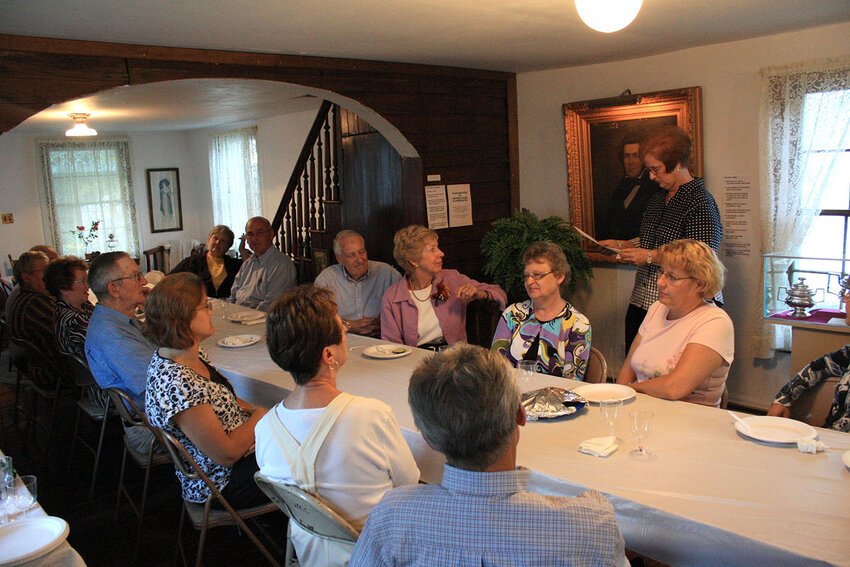
On February 12, 1930, Lincoln’s Birth-day, the Civic Club House was dedicated. The date was especially appropriate be-cause Abraham Lincoln was president when the house was built. In 1932, a special June meeting of the Civic Club was held to burn the club note which was taken out to cover the expenses of establishing the clubhouse. Even with many donations the expense came to $1,389.36. At the June 1932, meeting two hard wood maple trees were planted in the yard in memory of George and Martha Washington. These were also donated by Mrs. Hayungs. Furniture and kitchen furnishings were donated by club members. The Civic Club not only used the clubhouse for their meetings, but they also entertained many Mapleton residents at a wide variety of events. Teas, card parties, speech contests, and musical presentations were held in the clubhouse.
When the property was donated to the Civic Club it was stipulated that if the Civic Club ever decided that they could not maintain the historic home or if the club was disbanded that the house should be deeded to the City of Mapleton. When the Civic Club found it impossible to maintain the home and property they inquired about what the city would do if they were to be-come the owners of the property. The City of Mapleton, fearing the added expense to the city budget and not knowing the his-toric importance of the home, felt that it would be necessary to burn the old house and then attempt to sell the lot. When it was heard that the Ring House might face destruction three local men appeared before the city council and asked that a reprieve be given the house. In a short time nearly 30 residents began planning on how to save the house and with the approval of the council preservation of the property was begun. Over the years of preservation the largest amount of work has been completed by local high school students. The historic Ring House has been preserved for another generation .Visiting the home you can not help but imagine what it would have been like to live in the home when it was first built on the prairie west of the Maple River.